


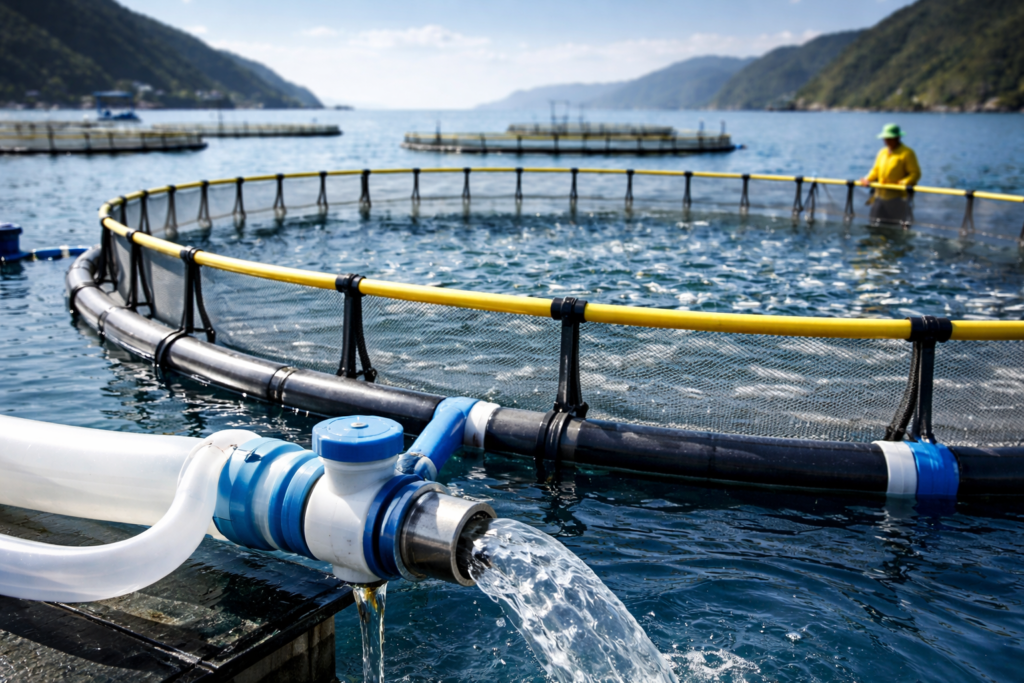
Silicone in Aquaculture: A Durable, Non-Toxic Solution for Modern Fish Farming
Silicone materials are rapidly becoming a crucial part of aquaculture infrastructure and conservation— from cage coatings to sealing systems — with their unique characteristic features. With Jehbco Silicones’ proven expertise in high-quality silicone extrusions and components, the aquaculture industry stands to benefit from materials that improve sustainability, reduce maintenance costs, and enhance operational efficiency.
Advantages of using Silicone
Silicone rubber possesses a variety of properties that are well suited for harsh aquatic environments;
Chemical inertness & non-toxicity -Silicone is inert to water, making it safe for aquatic organisms when used in compatible application as it does not leach any harmful compounds.
Hydrophobic surface- Silicone repels water and minimizes adhesion forces for biological matter. Many biological organisms such as algae, bacteria, and biofilms require water to attach and grow, silicone surfaces make it harder for them to establish a strong bond due to its hydrophobic nature making it an advantage for aquaculture.
UV and weather resistance: long-term durability and minimal degradation, even after prolonged outdoor exposure makes it reliable than other elastomers.
Stability across temperatures — Maintains elasticity in both cold and warm environments, ideal for open-ocean or pond systems. Elasticity is maintained across extreme temperatures ranging from -50°C to 250°C.
Key Applications in Aquaculture
1) Anti-Biofouling surfaces
Silicone-coated netting decreases biofouling compared with raw nets and makes cleaning significantly easier. (Biofouling- the unwanted accumulation of organisms like algae, barnacles, and bacteria on nets and cages)
2) Cage & containment Seals
Resistance to saltwater corrosion, long-term watertight performance, and low maintenance requirements make silicone ideal for floating cages, ponds, and flow-through systems. Its flexibility in being tailored to desired shapes also makes it perfect for dependable seals.
3) Structural Components & Accessories
Silicone tubing, sleeves, and shapes are also valuable in:
Water handling systems — Flexible silicone tubing performs consistently in pumps, filters, and transfer lines due to its chemical inertness and non-toxic nature.
Sensor & instrumentation protection — Silicone’s weather resistance guards electrical and monitoring devices used in water quality testing.
Conclusion
Jehbco Silicones are the manufacturers of high-quality silicone extrusions and we are expertise in designing components for demanding environments. With proven performance in food, medical, and industrial applications, Jehbco silicone solutions are well suited to aquaculture infrastructure where safety, durability, and compliance matter. Custom profiles, seals, and tubing can be developed to suit specific cage designs, water systems, and equipment requirements.
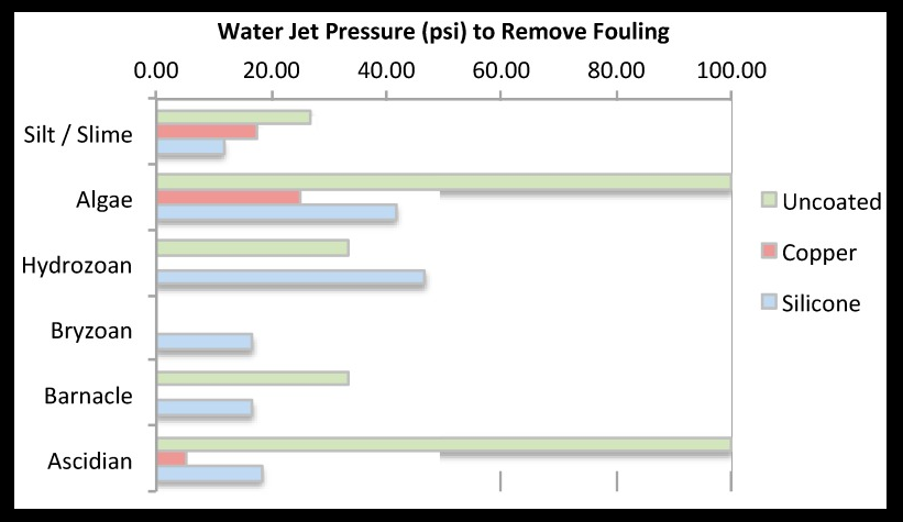
Figure 1: Average water-jet pressure required to remove the major fouling categories from the different net treatments.
References:
https://www.agriculture.gov.au/sites/default/files/sitecollectiondocuments/animal-plant-health/pests-diseases-weeds/marine-pests/submissions/10-ssm.pdf
https://pubmed.ncbi.nlm.nih.gov/25474085/
https://www.sciencedirect.com/science/article/abs/pii/S0044848699003282
https://www.sciencedirect.com/science/article/pii/S0025326X22007846
https://pubmed.ncbi.nlm.nih.gov/25474085/