


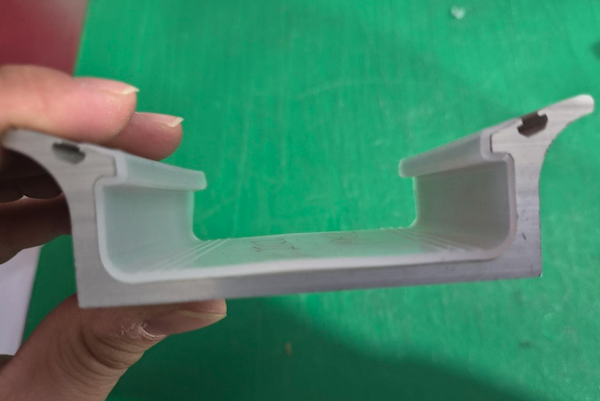
Jehbco Silicones Extrusion Tolerances – Precision Through Quality Control
Quality control is central to Jehbco’s approach to silicone extrusion. As a supplier to customers in medical and Defence applications, including naval, land and aerospace programs, Jehbco understands that silicone components are often required to perform in demanding environments where consistency, fit and reliability are critical. In these applications, dimensional accuracy can directly affect sealing performance, assembly efficiency, service life and the reliability of the final system.
For this reason, Jehbco places strong emphasis on controlling extrusion tolerances. Customers often require silicone profiles that exceed general industry tolerance classes, particularly where components are used in specialised equipment, regulated industries or critical operating environments. As shown in our tolerance chart below, Jehbco’s silicone extrusions are made to tolerances tighter than ISO 3302-1 Class E1, the industry gold-standard, across every listed nominal dimension range for cross-sections of solid extrusions.
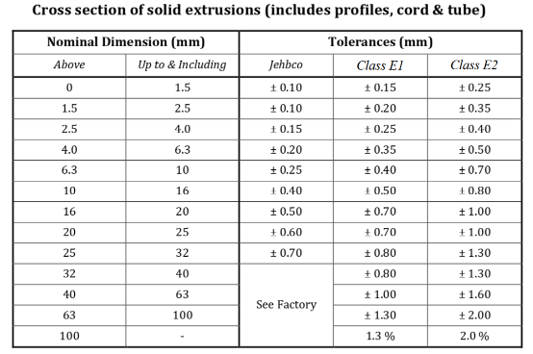
Table 1. Comparison of tolerances of solid extrusion cross-sections as specified by Jehbco Silicones and ISO 3302-1 Class E1 and Class E2.
This table demonstrates the company’s commitment to precision, consistency and high-quality silicone extrusion manufacturing.
Why Tight Tolerances Matter
Silicone extrusions are used in many applications where dimensional consistency is essential. A seal may need to compress evenly in a groove. A tube may need a controlled internal diameter and wall thickness. A gasket may need to fit cleanly into a housing without gaps, distortion or excessive installation force. In each case, small dimensional variations can affect performance.
This is especially important in medical and Defence applications, where silicone extrusions may form part of a larger assembly with strict design requirements. A profile that is too large may be difficult to install or may create excessive compression. A profile that is too small may not seal effectively. A wall section that varies too much may affect strength, flexibility, pressure resistance or service life.
By manufacturing solid silicone extrusion cross-sections to tolerances tighter than Class E1 values, Jehbco helps customers reduce the risk of fitment issues and improve consistency from batch to batch. Tight tolerance control supports reliable assembly, repeatable performance and reduced variation in the finished product.
How Jehbco Achieves Tight Tolerances Through Quality Control
Achieving tight extrusion tolerances requires control at every stage of production. Silicone is a flexible elastomer, and its final dimensions are influenced by compound selection, hardness, profile shape, wall thickness, tooling design, extrusion speed, curing conditions and handling. The material can expand, relax, cure and cool after passing through the die, so dimensional control must be built into the process from the beginning.
For Jehbco, this starts with tooling. The die must be designed to account for how the silicone compound will flow and how the profile will behave after it exits the tooling. The die opening is not simply the desired final shape of the extrusion. It must compensate for material movement, die swell, cure behaviour and the geometry of the profile.
This is particularly important for detailed profiles, thin wall sections, sealing features and parts that must fit accurately into a mating component. Small changes in tooling or process conditions can affect the final dimensions, so tooling design, setup and adjustment are all important parts of producing a consistent profile.
Once production begins, process control becomes critical. Extrusion speed, material feed, temperature, curing conditions, conveyor speed and handling all contribute to dimensional stability. Jehbco controls these variables to maintain consistency throughout production.
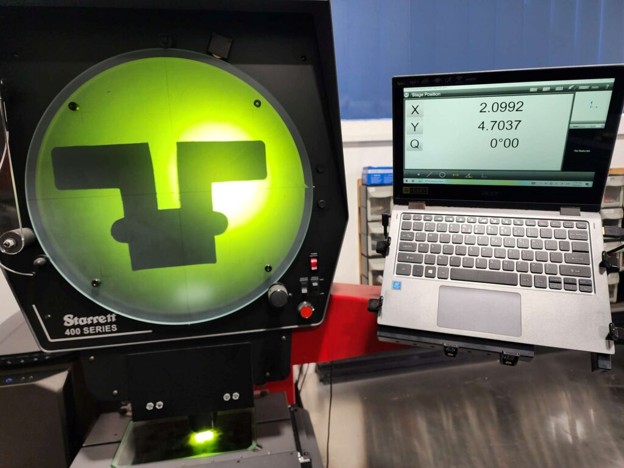
Figure 1. Starett VB400 optical comparator used at Jehbco for accurate, non-contact measurements of silicone extrusions.
Throughout production runs, Jehbco regularly takes samples for measurement and continually checks extrusion dimensions to ensure profiles remain within the required tolerance range. These in-process checks are carried out using several methods, including optical comparator inspection for detailed profile measurement and purpose-built test fitting jigs to confirm that mating parts fit correctly. The optical comparator allows highly accurate and precise non-contact measurement of silicone extrusion profiles, including fine details and flexible sections that may not be possible to measure reliably using traditional contact methods such as vernier calipers and micrometers. By checking dimensions during production, rather than only at final inspection, Jehbco can monitor consistency, identify variation early and maintain tight control over the finished extrusion.
This combination of tooling expertise, controlled processing, sample measurement, in-process inspection and final checks supports Jehbco’s ability to manufacture silicone extrusions to demanding dimensional requirements.
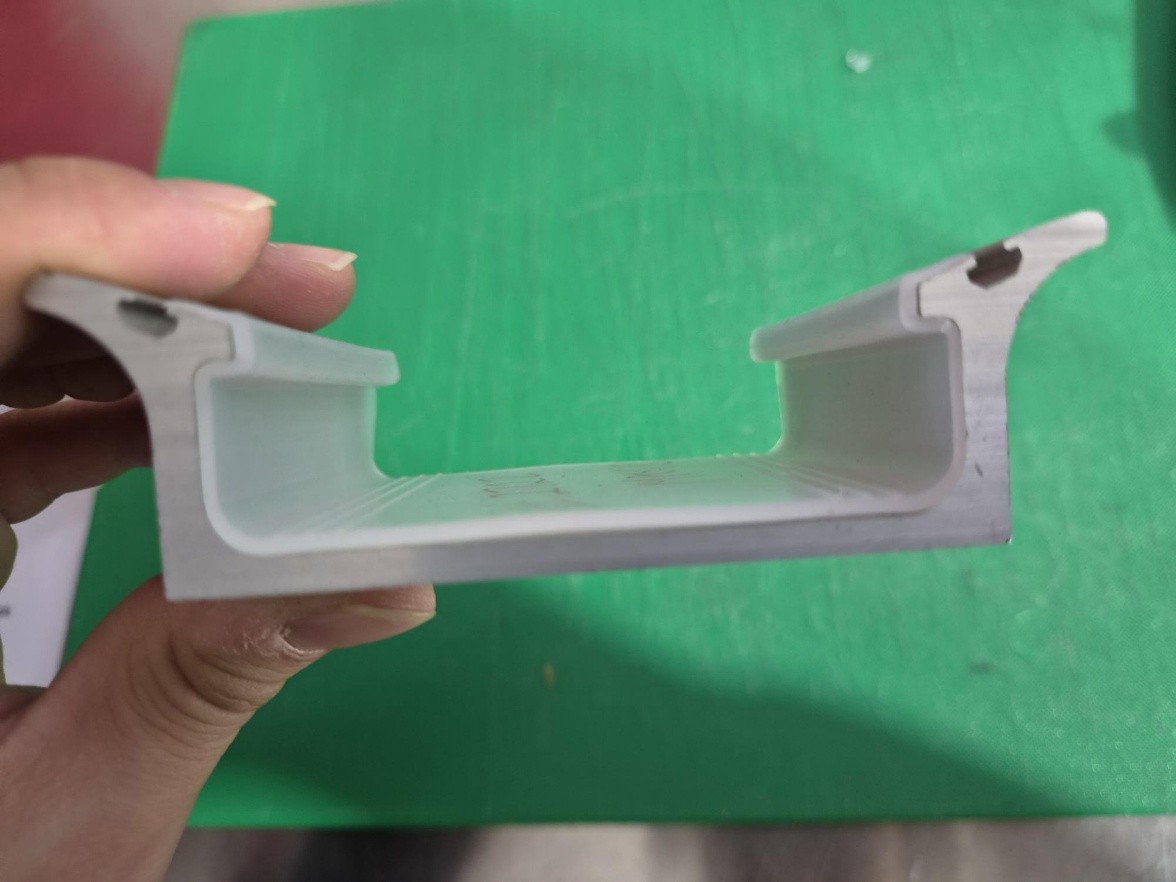
Figure 2. Custom fabricated aluminium test fitting jig used to test and ensure that the silicone extrusion fits into its mating parts as per the customer’s requirements.
Tailored to Customer Requirements
Although Jehbco’s tolerance chart provides a clear comparison against Class E1 and Class E2, many projects also have customer-specific requirements. Some customers may require a profile to match an existing part. Others may need a silicone extrusion to fit into a newly designed assembly. Some applications may require particular dimensions to be controlled especially closely because they affect sealing, retention, compression or flow.
Jehbco works with customers to understand these requirements and manufacture silicone extrusions to suit the intended application. This may include reviewing drawings, discussing critical dimensions, assessing material options and advising on manufacturability before tooling or production begins.
This collaborative approach is particularly valuable for custom silicone profiles. By considering tolerances early in the design and manufacturing process, customers can improve the likelihood of achieving a reliable, repeatable result. Jehbco can also advise when a requested tolerance is practical for extrusion and when design changes may help improve dimensional control.
Supporting Critical Applications
Jehbco supplies silicone extrusions for industries where quality and repeatability are essential. In medical applications, components may need to meet strict cleanliness, material and dimensional requirements. In Defence applications, including naval, land and aerospace systems, silicone profiles may be exposed to demanding operating environments or form part of equipment where reliability is critical.
In these sectors, customers need confidence that the parts they receive will meet the drawing and perform consistently in service. Jehbco’s ability to manufacture silicone extrusions to tolerances tighter than Class E1 supports this need. Whether the requirement is for a seal, gasket, tube, cord, strip or custom profile, each project is reviewed with consideration of the material, geometry, tolerance requirements and application.
Precision Silicone Extrusions from Jehbco
Jehbco’s tolerance comparison chart demonstrates our capability to manufacture solid silicone extrusion cross-sections to a higher standard than ISO 3302-1 Class E1 and Class E2 tolerance classes. For customers who require precision, consistency and application-specific performance, this provides a clear measure of Jehbco’s manufacturing quality.
Our approach combines technical understanding, controlled extrusion processes, appropriate tooling, in-process dimensional checks and final inspection. When tight tolerances matter, Jehbco provides quality-controlled, customer-focused manufacturing designed to deliver consistent silicone components for demanding applications.