


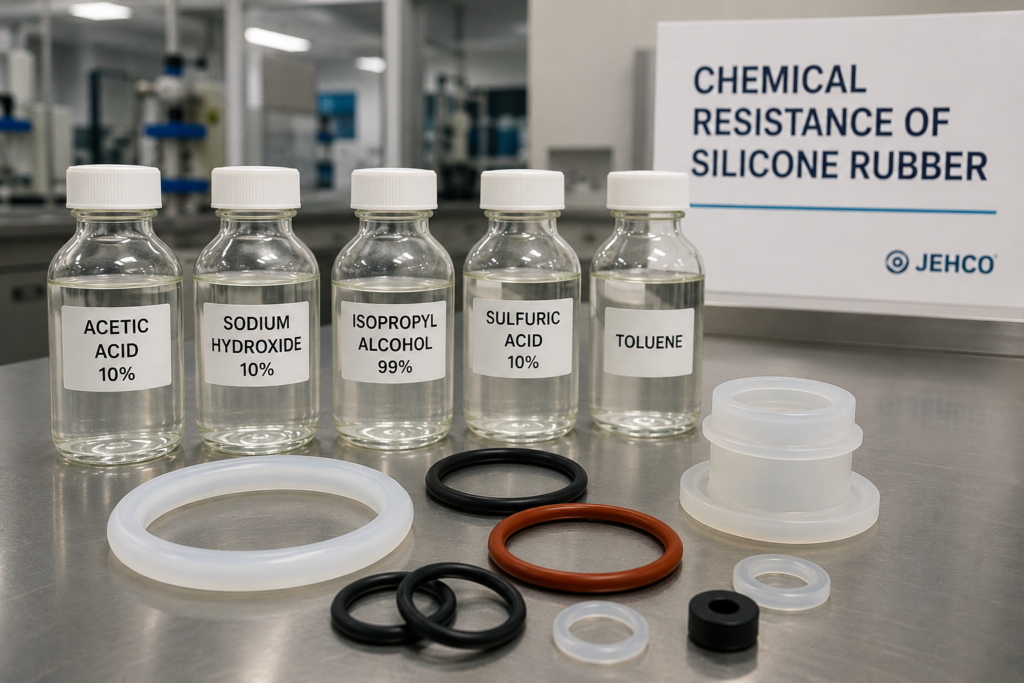
Chemical Resistance of Silicone Rubber
Silicone rubber boasts one of the most extensive chemical resistance profiles among commercially available elastomer families. This feature, combined with its excellent resistance to heat, UV, ozone and weathering, makes silicone rubber one of the most durable materials for use in construction and sealing applications. Concurrently, its excellent biocompatibility and low toxicity allows it to be used in a variety of food and safety applications as well.
As a predominantly polydimethylsiloxane based polymer, silicone rubber is highly hydrophobic and naturally repels water and polar solvents such as methanol, ethanol isopropanol and mild acids and bases. This hydrophobicity allows it to retain its mechanical and chemical characteristics upon prolonged exposure to these chemicals. While silicone is hydrophobic in nature, it also has good resistance to many long-chain hydrophobic materials such as paraffins and vegetable oils.
Despite excellent resistance to a variety of common solvents and chemical substrates, there are some families of chemicals where long-term exposure should be avoided, some with worse physical effects than others. Most commonly, small molecular weight hydrophobic molecules should be avoided, such as hexane, chloroform and in particular, aromatic compounds such as benzene, toluene and xylene. These chemicals will consistently cause the silicone rubber to swell, resulting in a softer material with significantly reduced mechanical properties. Additionally, contact with all common fuels such as will diesel also result in significant and rapid swelling of silicone articles, and contact with these substrates and their fumes should be avoided.
Additionally, while silicone rubber repels polar substances, it should not be used in contact with strong acids and bases. In moderate concentration, these compounds can catalyse the hydrolysis of Si-O bonds resulting degradation of the material over time. More concentrated solutions can result in other side-reactions with silicone rubber resulting in immediate degradation of the product. Similarly, Si-O hydrolysis can be observed in very long periods of contact with high pressure, high temperature steam. Despite this, typical autoclaving conditions do not usually result in significant degradation of silicone articles, and silicone is commonly used to manufacture autoclave and steam contact seals in a variety of industries.
While these are general trends in silicone chemical compatibility, always perform individual chemical resistance testing on silicone rubber articles with the contact substrate in question. Further detailed recommendations can be found on chemical compatibility charts, including one provided on the Jehbco website.
For more information, feel free to contact us through our website portal.